Robots get all the attention. But what keeps their cables from getting tangled?
Picture a busy distribution warehouse. Rows of shelving stretch across the building while robotic picking systems move from location to location, retrieving products and helping fulfill orders.
It's impressive technology. But there's an engineering challenge hiding behind all that movement.
What happens to the cables?
Robotic picking systems rely on power, control, and communication cables to operate. As the equipment moves, those cables have to move with it—sometimes over long travel distances and through thousands of repetitive cycles.
Without proper cable management, things can get messy pretty quickly.
That's where cable carriers, also known as energy chains, e-chains, or drag chains, come into play.
A Robotics Project with a Lot of Moving Parts
A while back, BA Associates worked with an OEM manufacturer developing a robotic picking system designed to travel along warehouse shelving.
The equipment needed a way to manage multiple cables while allowing the robotic system to move along its intended travel path.
Loose cables weren't an option. They needed to stay organized, protected, and properly guided throughout the equipment's movement.
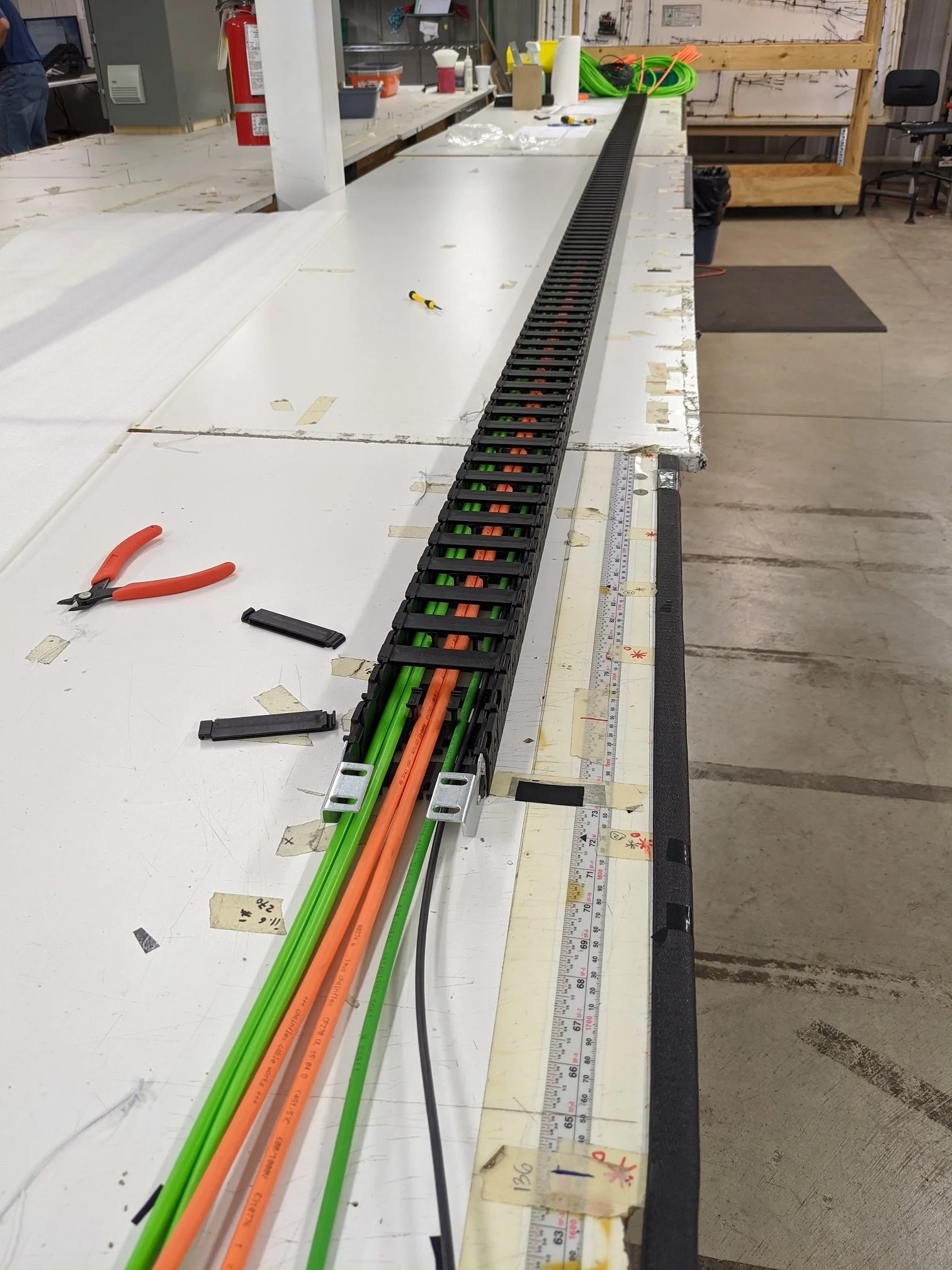
Working with IMS Electrol, we supplied a custom cable carrier assembly for the application.
And as you can see from the project photos, this wasn't your average cable chain!
How Does an Energy Chain Work?
An energy chain is a flexible mechanical carrier designed to guide and protect cables and hoses on moving equipment.
Rather than allowing cables to hang loosely or move unpredictably, the carrier provides a defined path for them to follow.
As the machine travels, the chain bends and moves with it, helping maintain the proper cable bend radius and reducing the risk of tangling, abrasion, and mechanical damage.
For automated warehouse equipment, this is particularly important.
Robotic picking systems may operate repeatedly throughout the day, making reliable cable management an essential part of the overall machine design.
Why Cable Management Matters in Warehouse Automation
When designing automated machinery, engineers spend considerable time evaluating motors, drives, sensors, controls, and mechanical components.
But cable management deserves just as much attention.
A properly selected cable carrier can help:
Protect critical cables: Reduce exposure to abrasion, excessive bending, and interference with surrounding equipment.
Support repetitive motion: Guide cables through repeated machine movements.
Improve cable organization: Keep power, control, and communication cables contained along a defined path.
Simplify machine integration: Provide a structured cable-routing solution within the equipment.
Reduce maintenance concerns: Help minimize cable damage associated with uncontrolled movement.
For an OEM manufacturing automated equipment, these considerations can have a direct impact on long-term machine reliability.
Not Every Cable Carrier Is Created Equal
One of the interesting things about energy chain applications is how much engineering goes into selecting the right system.
It's not simply a matter of choosing a chain that's long enough.
Engineers need to consider travel distance, operating speed, acceleration, cable quantity, cable weight, bend radius, and the environment in which the equipment will operate.
The internal arrangement of the cables is important, too. Cables need sufficient room to move without becoming compressed or interfering with one another.
For equipment with multiple moving electrical connections, these details can make a significant difference.
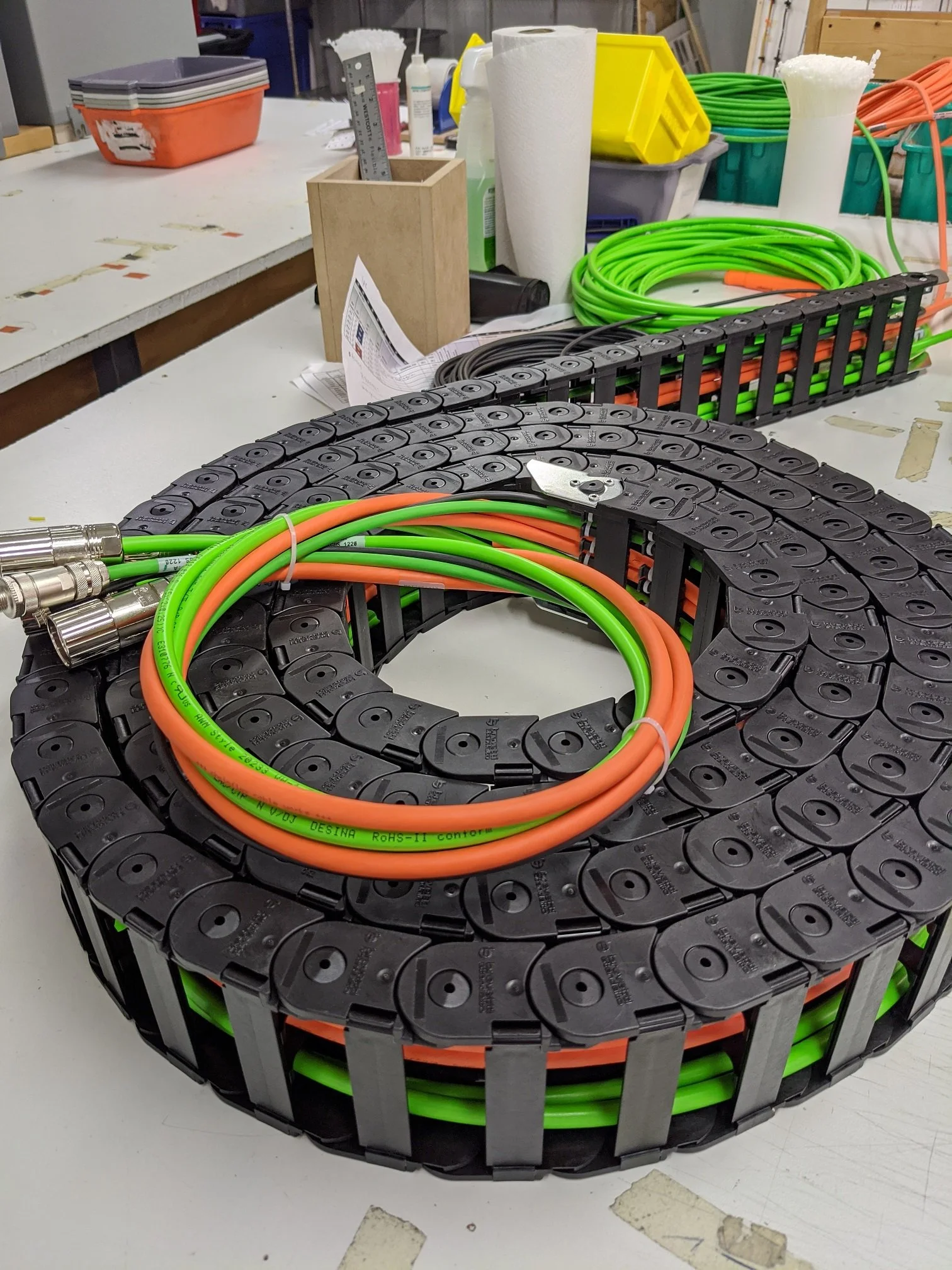
IMS Electrol offers cable carrier solutions for industrial equipment and automation applications where controlled cable movement is essential.
The Components Behind the Automation
One of our favorite things about working with OEM manufacturers is seeing how seemingly small components contribute to some pretty sophisticated equipment.
The robotic picking system gets the attention. After all, watching a robot move along warehouse shelves and retrieve products is a lot more exciting than watching a cable carrier!
But without properly managed cables, that impressive automation system can quickly run into trouble.
It's a good reminder that successful machine design often comes down to getting the details right.
And sometimes, those behind-the-scenes components are what keep the entire operation moving.
Working on an Automation Project?
At BA Associates, we work with OEM manufacturers and engineers to identify industrial components that fit their equipment and application requirements.
Through our partnership with IMS Electrol, we can help evaluate cable carrier and energy chain solutions for robotics, warehouse automation, material handling equipment, and other moving machinery.
Whether you're developing a new machine or improving an existing design, we'd be happy to discuss your application.