Salt Water Has Humbled Some of the Best Engineering in the World
Why Material Selection Matters More Than Many Engineers Realize
Ships.
Bridges.
Offshore platforms.
Cooling towers.
Salt water has challenged engineers for centuries, and while modern materials have come a long way, coastal environments remain one of the toughest places to install industrial equipment.
Recently, we visited a customer in Massachusetts, located just a few hundred feet from the Atlantic Ocean. The facility had spent years operating a galvanized steel cooling tower before ultimately replacing it with a Delta HDPE cooling tower.
The project serves as a great reminder that successful equipment selection isn't just about capacity—it starts with understanding the environment.
The Environment Is Part of the Design
When engineers size a cooling tower, the conversation usually begins with questions like:
How many tons of heat need to be rejected?
What approach temperature is required?
What flow rate is available?
What is the design wet bulb temperature?
Those are all important.
But there's another question that deserves equal attention.
Where will this equipment spend the next twenty years?
For equipment installed near the ocean, that answer changes everything.
Salt-laden air, constant humidity, and corrosive atmospheres accelerate deterioration of many traditional construction materials. Even well-maintained equipment can experience corrosion that significantly shortens its service life.
Why Galvanized Steel Struggles Near the Coast
Galvanized steel has served the cooling tower industry well for decades.
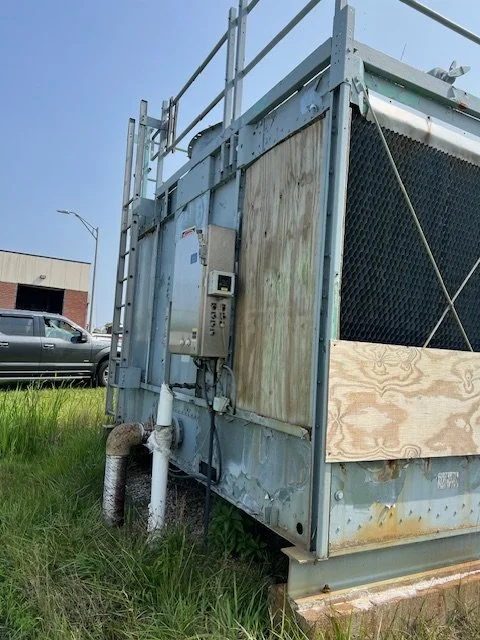
In many inland applications, it provides years of reliable service.
However, coastal wastewater facilities create a much more aggressive environment.
Several factors combine to accelerate corrosion:
Salt carried by ocean air
Constant moisture
Industrial process vapors
Warm operating temperatures
Continuous wet/dry cycling
Individually, each factor increases corrosion potential.
Together, they create one of the harshest operating environments for exposed steel.
Eventually, maintenance costs begin to increase, repairs become more frequent, and replacement becomes the most economical solution.
Looking Beyond Initial Cost
One of the most common questions I hear is:
"What's the least expensive cooling tower?"
It's a fair question.
But it usually isn't the right one.
A better question is:
"Which cooling tower will have the lowest lifetime cost in this application?"
Purchase price represents only one portion of ownership costs.
Over the life of a cooling tower, owners must also consider:
Preventive maintenance
Corrosion repairs
Downtime
Replacement components
Lost production
Equipment replacement
Selecting equipment based solely on initial cost often overlooks these long-term expenses.
Why This Facility Selected an HDPE Cooling Tower
After evaluating the application, the facility chose a Delta HDPE cooling tower.
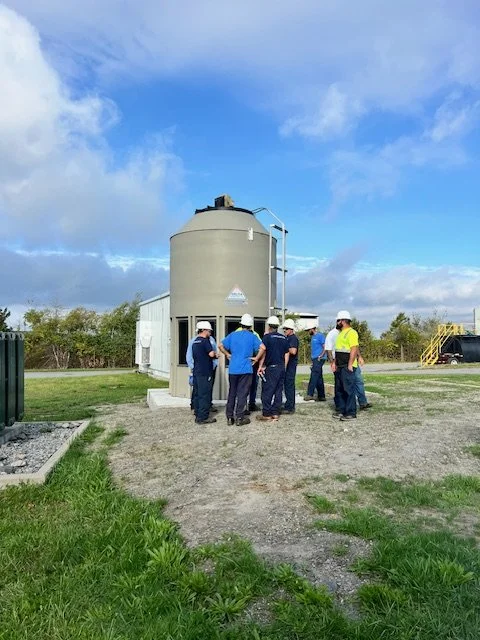
Unlike galvanized steel, high-density polyethylene (HDPE) is inherently resistant to corrosion caused by salt air and moisture.
For facilities operating in aggressive coastal environments, this offers several important advantages:
Excellent corrosion resistance
Reduced maintenance requirements
Long service life
No rust-related structural deterioration
Reliable operation in harsh environments
The selection wasn't simply about installing a new cooling tower.
It was about selecting a material designed specifically for the environment.
Every Application Is Different
One lesson I've learned over the years is that successful equipment selection starts long before a quote is prepared.
Every application has its own challenges.
Sometimes the most important variable is flow.
Sometimes it's temperature.
Sometimes it's pressure.
And sometimes...
It's simply where the equipment is going to live.
Understanding those details before selecting equipment often makes the difference between an installation that lasts decades and one that requires premature replacement.
Engineering Starts With the Right Questions
At BA Associates, we work with customers throughout New England to help evaluate industrial cooling applications and determine the right solution for each facility.
Whether you're replacing an aging cooling tower or designing a new system, the process should always begin with understanding the application—not just selecting equipment.
Because sometimes the most important specification isn't the cooling capacity.
It's the environment.
Need Help Selecting the Right Cooling Tower?
If you're evaluating a cooling tower replacement or designing a new industrial cooling system, we'd be happy to discuss your application and help identify the best solution for your operating environment.
📞 (603) 210-2479