Keeping Rolling Mills Running: Why Shell & Tube Heat Exchangers Remain the Workhorse of Metal Processing
Whether producing structural steel, aluminum coil, copper strip, or specialty alloys, today's rolling mills depend on one thing to maintain production and protect equipment:
Reliable process cooling.
Hydraulic systems, lubrication circuits, induction equipment, gearboxes, and rolling stands all generate significant heat. If that heat isn't removed efficiently, oil degrades, component life decreases, production slows, and unexpected downtime becomes far more likely.
For decades, shell & tube heat exchangers have remained one of the most dependable cooling solutions in metal processing facilities.
Why Cooling Is Critical in Rolling Mills
A rolling mill is a demanding environment.
Equipment operates continuously under heavy loads while exposed to high temperatures, vibration, mill scale, and airborne contaminants.
Several systems rely on effective cooling, including:
Hydraulic power units (HPUs)
Bearing lubrication systems
Gearbox oil cooling
Roll cooling circuits
Induction furnace cooling
Continuous casting equipment
Pickling and finishing lines
Maintaining proper operating temperature improves lubricant life, protects seals and bearings, and helps keep production running consistently.
Why Shell & Tube Heat Exchangers Continue to Be the Preferred Choice
Although plate heat exchangers have become popular in many industries, shell & tube designs continue to offer significant advantages in heavy industrial environments.
Built for Tough Operating Conditions
Rolling mills rarely provide ideal operating conditions.
Cooling water may contain suspended solids or scale, process fluids can become contaminated, and equipment must withstand pressure fluctuations and thermal cycling.
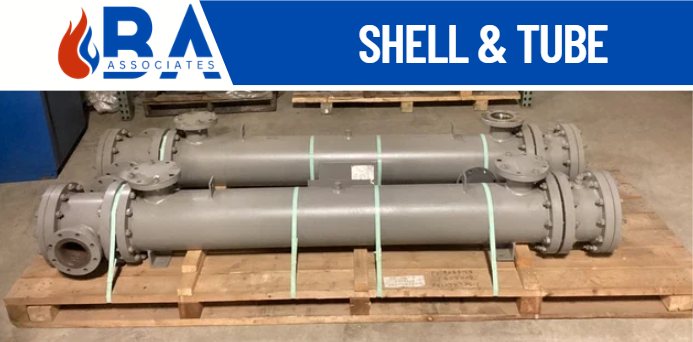
Shell & tube heat exchangers are well suited for these demanding applications because they provide:
Excellent mechanical durability
High pressure capability
Resistance to thermal shock
Long service life
Easy maintenance and tube replacement
For facilities operating around the clock, reliability often outweighs achieving the smallest possible footprint.
Easier Maintenance Means Less Downtime
One of the biggest advantages of shell & tube heat exchangers is serviceability.
Many industrial facilities already have maintenance personnel familiar with tube cleaning, inspection, and replacement.
Rather than replacing an entire exchanger, maintenance teams can often:
Clean fouled tubes
Replace tube bundles
Inspect baffles
Repair components during scheduled outages
That can significantly reduce lifecycle costs.
Typical Applications in Metal Processing
Shell & tube heat exchangers are commonly used throughout steel and aluminum plants, including:
Hydraulic Oil Cooling
Rolling mills rely on hydraulic systems operating under high pressure.
Maintaining oil temperature helps preserve viscosity, extend fluid life, and improve valve performance.
Lubrication Systems
Bearings and gearboxes generate significant heat during continuous operation.
Proper oil cooling reduces wear while extending equipment life.
Quench Water Systems
Many heat-treating and finishing processes require dependable cooling to maintain consistent product quality.
Process Water Cooling
Shell & tube heat exchangers can isolate plant water from closed-loop systems while efficiently transferring heat between process streams.
Why We Recommend Xylem Standard Xchange
At BA Associates, we work with customers throughout New England to select cooling equipment for demanding industrial applications.
For many metal processing facilities, Xylem Standard Xchange shell & tube heat exchangers provide an excellent balance of performance, durability, and serviceability.
Their broad product offering allows engineers to select exchangers for applications involving:
Hydraulic oil
Lubricating oil
Process water
Glycol mixtures
High-pressure cooling systems
Industrial machinery
Whether replacing an existing unit or designing a new cooling system, the ability to configure materials, tube bundles, and connection arrangements helps ensure long-term reliability.
Selecting the Right Heat Exchanger
Choosing the correct exchanger involves much more than matching flow rate.
Engineers should evaluate:
Heat load (BTU/hr or kW)
Fluid properties
Fouling potential
Pressure drop
Water quality
Maintenance accessibility
Future operating conditions
An exchanger that performs well on paper but cannot be maintained efficiently often becomes the most expensive option over its lifetime.
Partnering with BA Associates
BA Associates represents Xylem Standard Xchange throughout New England, helping OEMs, steel producers, aluminum processors, and industrial manufacturers select shell & tube heat exchangers for demanding applications.
Whether you're replacing an obsolete exchanger, designing new equipment, or improving the reliability of an existing cooling system, our engineering team can assist with sizing, selection, and application review.