Your Fan Isn't the Problem..
Why Industrial Fan Performance Often Comes Down to System Design
An industrial fan is one of the most scrutinized pieces of equipment in a ventilation system. When airflow falls short of expectations, the fan is often the first component blamed.
But in many cases, the fan is doing exactly what it was designed to do.
The real problem lies in the system surrounding it.
Recently, engineers from Hartzell Air Movement shared several real-world case studies at the 2026 AMCA International conference that highlighted a common theme: properly selected, properly tested fans can still underperform when installation details and system effects aren't accounted for.
A Real-World Example
Imagine a correctional facility with hundreds of prison cells.
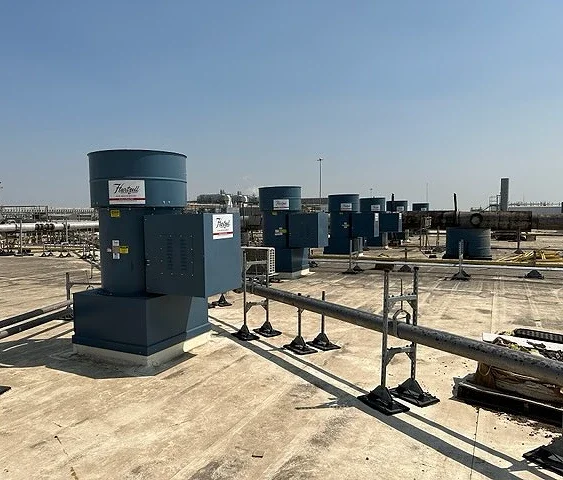
The ventilation system was designed to provide a specific airflow to every occupied space. The fan met its published performance rating during factory testing, yet the installed system couldn't achieve the required airflow.
The investigation eventually uncovered the issue.
Security bars installed across each cell reduced the effective airflow area by nearly 25 percent. That additional resistance had never been included in the original system calculations.
Nothing was wrong with the fan.
The system had changed.
What Is "System Effect"?
In the fan industry, this situation is known as system effect.
System effect describes the additional pressure losses and airflow disturbances created by real-world installation conditions that differ from the ideal laboratory conditions used to establish certified fan performance. Common causes include:
Elbows located too close to the fan inlet
Abrupt duct transitions
Dampers positioned immediately upstream or downstream of the fan
Protective screens or guards
Louvers and weather hoods
Process equipment that adds unexpected resistance
Non-uniform airflow entering the fan
Each of these conditions can reduce airflow, increase power consumption, create vibration, and shorten equipment life if they aren't considered during system design.
Why This Matters During Fan Selection
As a manufacturer's representative, one of the most common questions we receive is:
"The fan isn't producing the airflow we expected. Did we select the wrong fan?"
Sometimes the answer is yes.
More often, the answer is no.
The fan was selected using the available design information, but something changed between the design phase and the final installation:
Additional ductwork
Field modifications
New dampers
Equipment added later
Space limitations forcing tighter duct layouts
Unexpected inlet or discharge restrictions
These changes may seem minor individually, but together they can significantly affect system performance.
Getting It Right the First Time
The best fan installations begin long before equipment is ordered.
Early collaboration between the engineer, contractor, equipment supplier, and fan manufacturer helps identify installation details that could impact performance before they become expensive field problems.
At BA Associates, we regularly work with consulting engineers, OEMs, contractors, and industrial facilities throughout New England to review applications before equipment is released for production. Sometimes a small adjustment to duct geometry, fan orientation, or accessory selection can eliminate problems before startup.
The Takeaway
An AMCA-certified fan performs exactly as it was tested.
However, every real-world installation introduces variables that laboratory testing cannot predict.
Before assuming a fan is undersized or defective, it's worth taking a closer look at the entire air-moving system. In many cases, the solution isn't replacing the fan—it's understanding how the system around the fan influences its performance.
If you're designing a new ventilation system or troubleshooting an existing installation, BA Associates can help evaluate the application and work with Hartzell Air Movement to develop the right solution before small installation details become costly performance issues.