
What Is Pump Cavitation? How to Recognize It Before It Destroys Your Pump
If you've ever heard a centrifugal pump sound like it's pumping rocks or marbles, there's a good chance you've experienced cavitation.
It's one of the most common, and misunderstood, causes of premature pump failure.
Many people assume a cavitating pump has bad bearings, a damaged impeller, or simply needs to be replaced.
In reality, cavitation is usually the pump's way of telling you there's a problem somewhere else in the system.
Understanding what causes cavitation can save thousands of dollars in repairs and prevent unnecessary downtime.
What Is Cavitation?
Cavitation occurs when the pressure of the liquid entering a pump drops below its vapor pressure.
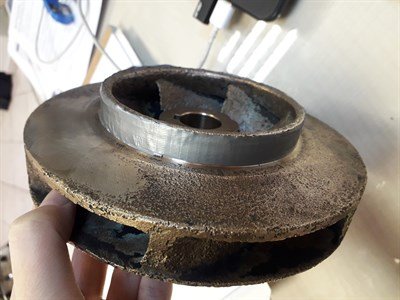
When that happens, tiny vapor bubbles form at the eye of the impeller.
As the liquid continues through the pump, pressure rapidly increases and those bubbles violently collapse.
While the bubbles themselves are microscopic, each collapse creates a tiny shockwave against the impeller.
Now multiply that process by millions of bubbles every second.
The result is a slow but relentless attack on the pump's internal components.
What Does Cavitation Sound Like?
One of the easiest ways to identify cavitation is by listening.
Many operators describe it as:
Pumping gravel
Marbles rattling inside the casing
Popping or crackling noises
Excessive vibration
If your pump suddenly becomes noisy without an obvious mechanical problem, cavitation should be one of the first things you investigate.
Signs Your Pump May Be Cavitating
Besides noise, common symptoms include:
Excessive vibration
Reduced flow
Lower discharge pressure
Fluctuating pressure readings
Increased power consumption
Premature mechanical seal failures
Bearing failures
Pitted or eroded impellers
Unfortunately, many facilities replace bearings or seals only to have the replacement fail again because the real issue, cavitation, was never corrected.
What Causes Cavitation?
Cavitation isn't usually caused by a defective pump.
It's caused by insufficient pressure at the pump inlet.
Some of the most common causes include:
Restricted Suction Piping
Dirty strainers, partially closed valves, undersized piping, or clogged suction lines all reduce pressure entering the pump.
Low Liquid Level
If the liquid level in the supply tank drops too low, the pump may not have enough Net Positive Suction Head Available (NPSHA).
High Fluid Temperature
As temperature increases, a liquid's vapor pressure also increases.
That means hot liquids cavitate much more easily than cold ones.
Air Leaks
Even tiny air leaks in the suction piping can create conditions that promote cavitation.
Excessive Pump Speed
Running faster than the original design speed increases the pump's NPSH requirements.
Sometimes a VFD adjustment or pulley change can solve the problem.
What Does Cavitation Do to a Pump?
Many people expect catastrophic failure.
Instead, cavitation usually causes gradual damage.
Over time you'll begin to notice:
Impeller erosion
Pitted metal surfaces
Increased vibration
Seal failures
Bearing damage
Reduced efficiency
Higher maintenance costs
Eventually, performance falls below process requirements and the pump is replaced—even though the replacement pump will experience exactly the same problem.
Don't Just Replace the Pump—Find the Root Cause
One of the most common conversations we have with customers starts like this:
"We've replaced this pump three times."
Our next question is usually:
"What changed in the system?"
The answer often isn't the pump.
It might be:
New piping
Dirty strainers
A process change
Higher operating temperatures
Reduced suction pressure
Increased flow requirements
Until those issues are corrected, even the best pump will struggle.
Preventing Cavitation
The best way to prevent cavitation is during system design.
Key considerations include:
Proper suction pipe sizing
Minimizing suction losses
Keeping strainers clean
Maintaining adequate liquid levels
Verifying available NPSH exceeds the pump's required NPSH
Avoiding unnecessary fittings near the pump inlet
Selecting the correct pump for the application
A little attention during design can prevent years of maintenance headaches.
How BA Associates Can Help
At BA Associates, we help customers throughout New England troubleshoot pump performance issues and select pumping systems for demanding industrial applications.
As representatives for American Stainless Pumps, MTH Pumps, Armstrong, and Russell Pump Company, we've seen firsthand that many "pump failures" are actually system design issues.
Whether you're replacing an existing pump or trying to determine why a pump isn't meeting expectations, we'll help evaluate the entire system, not just the equipment.
Because the best pump isn't the one with the biggest motor.
It's the one that runs reliably for years without anyone noticing it's there.